Home accessibility changes in Charlotte, from ramps to stair lifts to safer bathrooms
Charlotte Home Accessibility helps people in Charlotte and nearby towns stay safe at home by connecting them with independent local contractors for stair lifts, walk-in showers and tub conversions, wheelchair ramps, walk-in tubs, grab bars and doorway widening.
Whether you're planning for yourself or for a parent, you can take your time. Call to talk it over, or ask for a contractor to come and look.
Or call (980) 414-6492
Start with the room
Pick the part of the home that's hardest right now to see the changes people most often make there.
Entrance: common changes
Getting in and out is often the first problem, especially with steps at every door.
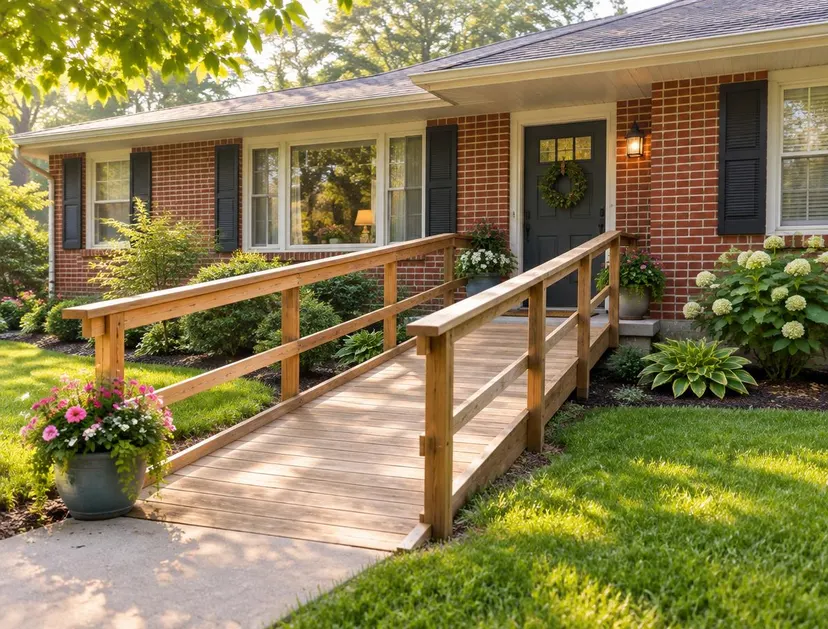
- Wheelchair ramp
Wood or modular aluminum, sized to the height of your steps.
- Vertical platform lift
For porches too high for a ramp to fit the yard.
Stairs: common changes
When the bedroom or laundry is upstairs, the staircase decides how the home gets used.
- Stair lift
A seat that rides a rail along straight or curved stairs.
- Main-floor living plan
Moving the bedroom and bath downstairs instead.
Bathroom: common changes
Stepping over a tub wall on a wet floor is one of the hardest moves in the house.
- Walk-in shower or tub conversion
Low or no curb, a seat and a handheld shower.
- Grab bars
Anchored bars at the toilet, tub and shower.
- Walk-in tub
A door in the side and a built-in seat for people who want to soak.
Bedroom: common changes
Getting in and out of bed and through the bedroom door matters every single day.
- Doorway widening
More clear width for a walker or wheelchair.
- Ceiling lift
A track-mounted lift for safer bed-to-chair transfers.
Kitchen: common changes
Reaching, bending and standing for long periods can make cooking tiring.
- Accessible kitchen changes
Pull-out shelves, lower work surfaces, knee space.
- Whole-home planning
Lever handles, lighting and step-free paths.
What these changes typically cost
Published national ranges, so you have a starting point before anyone visits. See what moves the price.
Stair lift
- Straight staircase
- $2,000–$8,500
- Curved staircase
- $7,500–$15,000+
Wheelchair ramp
- Permanent ramp
- $1,000–$6,000+
- Modular ramp
- $350–$3,000
- Portable ramp
- $50–$600
- Installed, per linear foot
- about $100–$250
Walk-in shower
- Prefab shower
- $1,000–$8,000
- Custom tiled shower
- $3,500–$15,000
Walk-in tub
- Installed
- $4,000–$18,000
Grab bars
- Per bar, installed
- $100–$350
These are published national ranges, not quotes. Your actual price could be higher or lower. The independent local contractor who visits your home sets the final price.
Sources (fetched October 24, 2026): HomeGuide: Stair Lift Cost (updated Sep 2, 2025); HomeGuide: Wheelchair Ramp Cost (updated Nov 6, 2024); HomeGuide: Walk-In Shower Cost (dated Sep 2023); HomeGuide: Walk-In Tub Cost (updated Aug 27, 2025); HomeGuide: Grab Bar Installation Cost (updated Sep 2, 2025).
Before the home visit
A few minutes of preparation helps the contractor give you a clearer answer.
- Measure the width of each doorway the person needs to use, from the open door to the opposite stop.
- Count the steps at every entry, and measure the total height from the ground to the door threshold.
- Note who uses each space and any mobility aids: cane, walker, wheelchair, scooter or shower chair.
- Take photos of the bathroom, the staircase from top and bottom, and the entry you'd like to use.
- Ask each contractor about the warranty, who services the equipment and what a service plan covers.
A physical or occupational therapist can also look at how someone moves around the house and recommend changes. Ask your doctor whether a home assessment is an option.
Ways people pay
- Out of pocket. Many people pay for home changes themselves, sometimes in phases, starting with the most urgent room.
- Medicare. Medicare covers certain durable medical equipment, but home changes such as ramps, grab bars and stair lifts are often not covered. Check with Medicare's equipment coverage page or your plan before counting on it.
- Veterans' benefits. Some veterans may qualify for VA home-adaptation grants such as HISA (Home Improvements and Structural Alterations). Check eligibility with the VA before work begins.
Common questions
What is the difference between a straight and a curved stair lift?
A straight stair lift runs on a single rail along a staircase with no turns or landings, so the rail can often be cut from stock lengths. A curved lift is for stairs that turn, have a landing partway up, or wrap around; its rail is usually made to fit your stairs after they are measured, which is why curved lifts tend to cost more and take longer to arrive.
Should I rent or buy a wheelchair ramp?
Renting can make sense for a short recovery, such as after a surgery, when you expect to need the ramp for a few months. Buying usually makes more sense when the need is long-term. Modular aluminum ramps are popular for both because they can be taken apart and moved. Ask any provider how rental fees compare with the purchase price over the time you expect to use it.
How long does a tub-to-shower conversion take?
It depends on the scope. A prefab shower kit that fits the old tub space can sometimes go in within a few days. A custom tiled, curbless shower that needs the floor lowered, plumbing moved or walls rebuilt can take longer, and drying and inspection time adds to the schedule. The contractor who visits can give you a timeline for your bathroom.
Do I need a permit for a wheelchair ramp?
Often, yes, for a permanent ramp attached to the house, but rules vary by county and town. In Mecklenburg County, permits go through Mecklenburg County Code Enforcement; other counties and the South Carolina towns have their own offices. Modular or temporary ramps may be treated differently. If you live in a neighborhood with an HOA, check its rules for exterior changes too.
Can grab bars be installed on tile?
Yes. Installers drill through tile with bits made for it and anchor the bar into wall studs, blocking behind the wall, or specialty anchors rated for grab bars. A towel bar or a suction-cup handle is not a substitute. If you are remodeling anyway, ask for blocking inside the walls so bars can go exactly where they are needed.
How wide should a doorway be for a wheelchair?
ADA guidance commonly cites 32 inches of clear width, measured from the face of the open door to the opposite stop. Many older homes have 24 to 30 inch interior doors. Wider chairs, scooters or a helper walking alongside may need more room, so measure the chair itself before deciding.
Tell us what would help at home
Let us know which room is giving trouble, who the change is for, and how soon you'd like it done. There's no charge and no obligation.
Rather talk it through? Call (980) 414-6492.