
Stair Lift Installation in Charlotte, NC
Charlotte Home Accessibility introduces Charlotte homeowners to independent providers for stair lifts, wheelchair ramps, bathroom conversions and grab bars — helping you explore seated travel between floors.
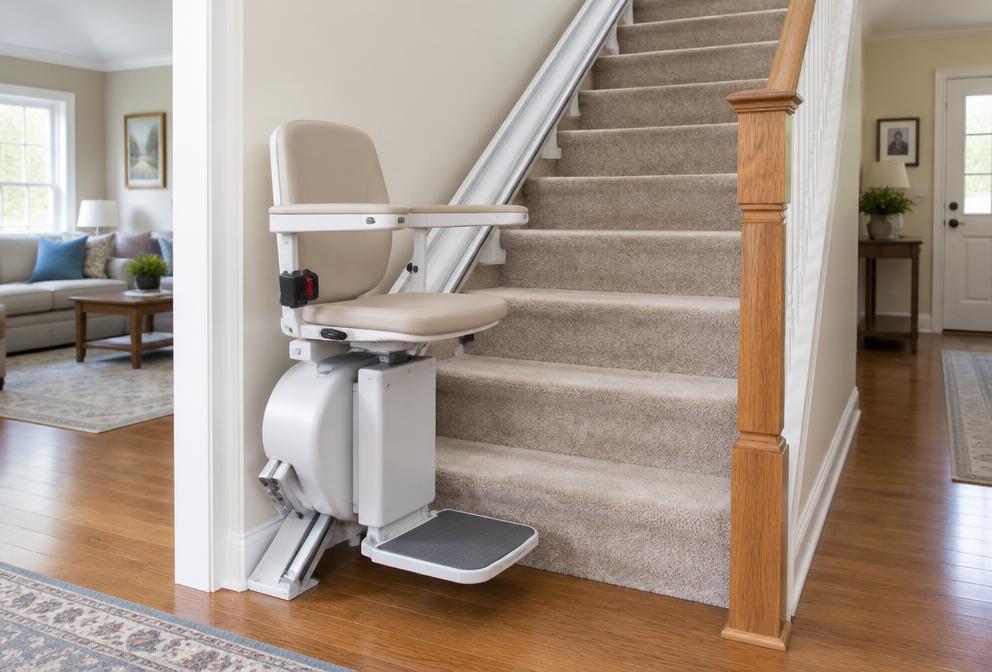
When stairs become tiring or uncertain, a seated stair lift may help someone continue using upstairs bedrooms or a lower-level living area. The best starting point is how the person sits, transfers and manages the controls. A lift that fits the staircase still needs to fit the rider and leave a workable landing at each end.
Charlotte Home Accessibility connects households with independent local providers; those providers assess, quote and install their own equipment. Tell them about knee movement, balance, caregiver assistance and any anticipated changes in mobility. For Charlotte split-level homes, several short flights can require a different plan from one continuous staircase, so include every level used during the day.
Straight rails and custom curves solve different stairs
A straight rail typically serves a single uninterrupted flight. Curved systems are measured for turns, intermediate landings or changes in pitch, with a rail made for that staircase. The rail commonly mounts to stair treads rather than the wall, but attachment details depend on the product and stair construction. Ask how the installation affects flooring and future removal.
Keep the hall and landing usable
A rail can project beyond the bottom step, where it may conflict with a doorway or walking route. Folding rail options, parking positions and seat-folding dimensions should be discussed before ordering. The provider must evaluate remaining stair clearance rather than assuming a narrow staircase will accommodate every model.
Test the transfer, not just the ride
Seat height, armrest position, footrest reach and swivel operation influence whether a rider can get on and off safely. A powered swivel or footrest may reduce bending for some users, but does not replace an assessment of transfer ability. Ask how the seat locks at the upper landing and whether a caregiver can reach the controls without standing awkwardly on the steps.
- Match the rated capacity to the rider and any items carried.
- Review restraint use and obstacle sensors with the provider.
- Arrange a demonstration when an appropriate model is available.
Understand charging and interruption planning
Many residential stair lifts use a battery-powered motor with charging contacts at designated rail positions. Ask where the chair must park to charge, what a warning signal means and what happens during a power outage. Battery backup is finite; available trips depend on the model, battery condition and load. Confirm electrical requirements, applicable code review and a service contact before making a decision.
How a stair lifts project typically goes
- Discuss rider needs. Describe movement limitations and the help available at each landing. If a transfer is uncertain, involve an occupational therapist or another qualified clinician before selecting equipment.
- Survey the full staircase. The independent provider measures stair geometry, checks mounting conditions and reviews doorways. For curved rails, confirm how measurements are verified before custom fabrication begins.
- Compare configuration and support. Read the proposal for seat features, rail length, electrical work and warranty terms. Ask which company handles future service and whether batteries and labor have separate coverage.
- Practice with the installed controls. Request instruction on folding, swiveling, parking and responding to faults. The intended rider and caregiver should understand the operating limits before relying on the lift alone.
Materials, durability & upkeep
Rail and rack surfaces
Steel or aluminum rail assemblies need manufacturer-approved care. Avoid applying household lubricants unless the service instructions specifically call for them, since some products attract damaging debris.
Upholstery and seat supports
A cleanable seat covering is helpful when equipment is used throughout the day. Check cushion support, armrest stability and cleaning compatibility rather than choosing only by color.
Drive batteries and charging parts
Batteries are wear components with replacement needs that vary by use and environment. Ask for signs of declining charge and the correct procedure for extended periods away from home.
Stair Lifts questions
Can a stair lift carry someone in a wheelchair?
A seated stair lift generally requires transferring out of the wheelchair. A platform lift is a different equipment category; where appropriate, providers should discuss its space requirements and applicable ANSI/ASME A18.1 provisions.
Will one lift serve both flights of a split-level home?
A continuous custom rail may be possible, but some arrangements use separate units. Discuss whether repeated transfers would be manageable before choosing a layout based only on equipment cost or footprint.
Can other family members still use the stairs?
Often they can, subject to remaining clearances and the stair layout. Ask to review dimensions with the seat and footrest folded, and consider anyone who carries laundry or assists another person.
Not sure this is the right fit? Call us or send the form below and describe the situation — we’ll point you to the right kind of provider. Requests come in from across the metro, including Ballantyne, NC, Charlotte, NC, Concord, NC, Cornelius, NC, Fort Mill, SC and more.