
Modular Aluminum Wheelchair Ramps in Charlotte, NC
Charlotte Home Accessibility helps Charlotte families find independent local providers for modular aluminum ramps, stair lifts, accessible showers and grab bars — including sectional ramp systems suited to changing access needs.
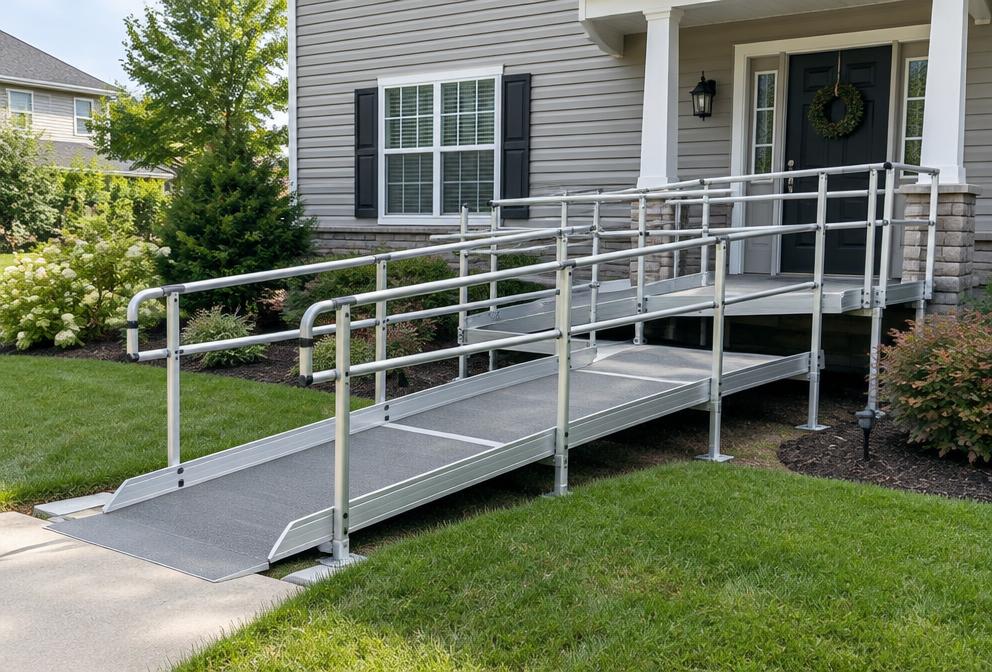
Modular aluminum ramps use manufactured runs, platforms and adjustable supports to create an entrance route. They can be useful when a household needs an alternative to a site-built wood structure or wants a system that may be reconfigured later. Suitability still depends on the elevation, ground conditions and space available around the home.
Through Charlotte Home Accessibility, you can connect with independent providers to discuss a specific system rather than choosing from a photograph alone. Ask how its parts fit your doorway and mobility equipment, what the written load rating covers and which adjustments remain possible after installation. Relocatable does not mean every configuration can be moved without replacement parts or fresh site preparation.
Match manufactured modules to the actual rise
Standard-length sections make layout planning straightforward, but the right combination still requires careful measurement. A provider may use intermediate platforms to change direction or create resting space. The common 1:12 slope reference can make the total run longer than expected, especially where a raised porch sits above a sloping driveway.
Check the complete system rating
Compare the combined weight of the user, mobility device and any assisting person with the manufacturer’s stated limits. Confirm whether a rating describes distributed loading or another tested condition. Individual panel strength is not enough if supports, connectors or platforms are mismatched.
Choose traction for wet shoes and small casters
Extruded grooves, perforated decking and expanded-metal surfaces feel different under wheels and walking aids. Ask to inspect a sample and discuss cane tips, narrow casters and bare feet if relevant. Charlotte thunderstorms can leave windblown debris across a ramp, so the surface should be evaluated for both traction and practical cleaning access.
- Confirm that seams stay flush under normal use.
- Discuss handrail grip and edge curbs separately from deck texture.
- Check whether water drains through the deck or toward a landing.
Plan supports, approvals and future changes
Adjustable legs need stable bearing surfaces; they should not simply disappear into wet landscaping. Ask about pads, anchoring and periodic level checks after heavy rain. A provider should also clarify permit obligations and whether the proposed use calls for ADA 2010 Standards, ICC A117.1 or residential code review. Commercial accessibility involves more than purchasing a product marketed as compliant.
How a modular aluminum ramps project typically goes
- Identify the expected duration. Explain whether access is needed during recovery or for ongoing use. Ask independent providers about available purchase or rental arrangements without assuming either option is offered.
- Map the module layout. Review a drawing showing runs, platforms and door clearance. Have the provider identify the usable width between rails and the space left beside parking or garden beds.
- Verify components and site work. Request the system name, loading information and foundation approach in writing. Confirm whether delivery, assembly, anchoring and any required approval are included.
- Discuss handover and adjustments. Ask how to spot settling, loose connections or an uneven transition. Keep the manufacturer’s instructions and learn who to contact if the route needs modification later.
Materials, durability & upkeep
Structural aluminum sections
Aluminum resists rust, but connections and finishes still need inspection. Coastal assumptions do not replace the manufacturer’s guidance for local exposure and cleaning products.
Compatible connection hardware
Specified fasteners help preserve the system’s intended performance. Substituting miscellaneous hardware can create corrosion concerns or compromise the way panels and rails transfer loads.
Support pads and base materials
Properly selected pads spread loads onto prepared ground. Their size and placement should reflect the site rather than a generic expectation that every lawn provides equal support.
Replaceable deck components
Ask whether damaged panels or rail segments can be ordered individually. Documenting the model and configuration makes future maintenance discussions easier, especially if ownership changes.
Modular Aluminum Ramps questions
Can modular sections be reused at another home?
Possibly, if they remain serviceable and the manufacturer supports the new arrangement. Different rise, footprint and ground conditions may require additional modules, new supports or a completely different configuration.
Will aluminum become uncomfortable in summer?
Sun exposure can warm metal surfaces. Discuss shade, handrail contact and the intended users with the provider; do not add improvised coverings that could trap water or interfere with traction.
Does a modular ramp always avoid a permit?
No. Removability alone does not establish an exemption. The installer should confirm local requirements for the property, intended use and attachment method before work begins.
Not sure this is the right fit? Call us or send the form below and describe the situation — we’ll point you to the right kind of provider. Requests come in from across the metro, including Ballantyne, NC, Charlotte, NC, Concord, NC, Cornelius, NC, Fort Mill, SC and more.