
Walk-In Tub Installation in Charlotte, NC
Charlotte Home Accessibility offers a connection to independent Charlotte-area providers for walk-in tubs, shower conversions, stair lifts and grab bars — with guidance here on whether seated soaking fits your routine.
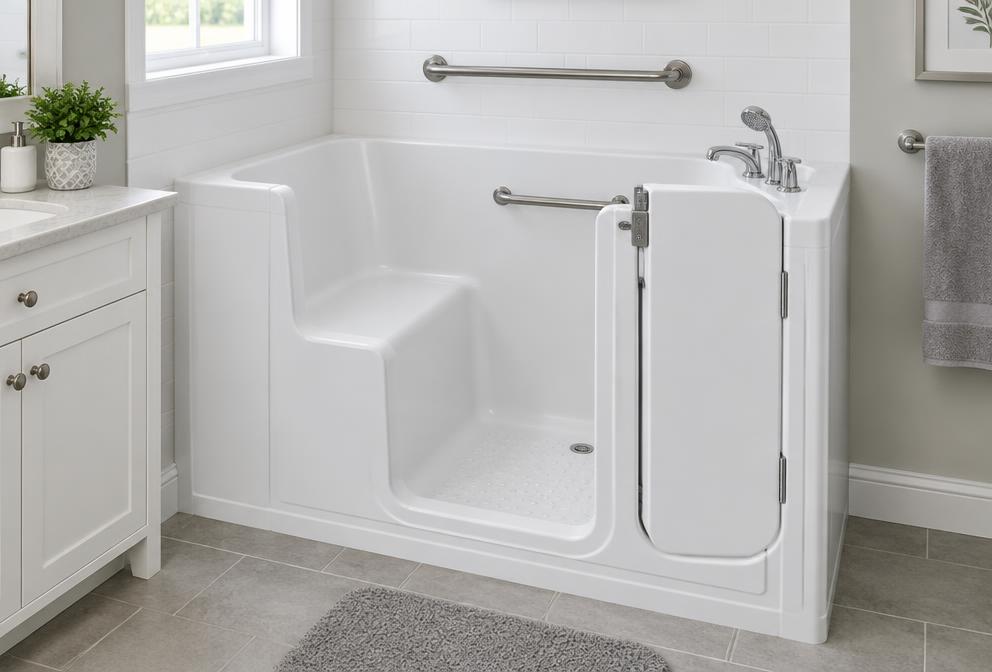
A walk-in tub combines a door and built-in seat to reduce the need to climb over a conventional bathtub wall. It still requires a threshold crossing, and most models require the bather to remain inside while water fills and drains. That sequence deserves careful consideration if someone becomes cold, fatigued or anxious while waiting.
Charlotte Home Accessibility is a referral resource, not the company supplying or installing your tub. Independent providers can review the room, discuss product differences and explain their own installation scope. Consider both the person’s preference for soaking and their ability to close the door, operate the controls and exit after the bath. Easier entry does not necessarily mean every other bathing task becomes easier.
Try the doorway and seated position before choosing
Door direction, opening width and seat height vary among models. An inward-swinging door needs space inside the basin, while an outward-swinging design needs clear floor space outside. Ask whether a demonstration is available and check knee room, foot placement and control reach. If the person transfers from a wheelchair, evaluate that specific movement rather than relying on the product name.
Plan assistance without crowding the bather
A caregiver may need room beside the door to help with clothing or operate a handheld shower. The toilet or vanity can limit that space even when the tub fits the alcove. Discuss what assistance is realistic and whether a shower-based arrangement would better support the household’s needs.
Check hot-water capacity and electrical requirements
A larger bathing volume can strain an existing water heater. The provider should compare the selected tub’s requirements with household supply and simultaneous demands, rather than promising a full warm bath from capacity alone. Jetted or heated features may need electrical work, dedicated protection or service access; ask who is responsible for those details and required inspections.
- Review thermostatic mixing valves and safe delivered-water temperatures.
- Ask how long filling and draining take under the home’s actual conditions.
- Identify accessible shutoffs and maintenance panels before installation.
Protect the bathroom around a heavy, water-filled fixture
The combined load of tub, water and occupant requires suitable support. Older homes may need framing or subfloor evaluation, especially where leaks have softened an existing bathroom floor. A provider should also plan the delivery route through doors and hallways, the drain connection and perimeter sealing. Attractive trim should not conceal service points that will need to remain reachable.
How a walk-in tubs project typically goes
- Review the bathing sequence. Talk through entry, door closure, filling, washing, draining and exit. Include an alternative plan for times when the person is unwell or cannot tolerate waiting inside the tub.
- Assess the home’s capacity. The independent provider measures access paths and checks plumbing, electrical and structural needs. Ask whether any water-heater changes are necessary and whether they are included in the proposal.
- Select features deliberately. Compare door geometry, controls, grab points and optional jets. Separate essential access features from extras that introduce additional cleaning, power use or maintenance obligations.
- Review operating and care instructions. Have the provider explain the door latch, seals, drain controls and any emergency procedures supported by the manufacturer. Keep service information where both the bather and caregiver can find it.
Materials, durability & upkeep
Acrylic or gelcoat surfaces
Both appear in walk-in tub construction, with care requirements that differ by product. Use approved cleaners and ask how scratches, chips or loss of surface gloss should be addressed.
Door seals and latches
Gaskets need clean contact surfaces and periodic inspection. A leaking seal is a service issue; tightening or altering a latch without guidance can damage the closure mechanism.
Jet piping and pumps
Air and water-jet systems have different cleaning routines. Ask how residual water is managed and whether the owner can complete the required cleaning with their available reach and strength.
Integrated support points
Molded handholds and factory-installed bars should be evaluated for their intended use. Additional wall supports require suitable backing and should not be attached through the tub shell without approval.
Walk-In Tubs questions
Can I open the door while the tub is full?
Generally the water must drain before the door can be opened safely; exact operation depends on the model. Ask for a clear explanation of drainage and emergency procedures before deciding the design suits you.
Do jets provide a guaranteed health benefit?
No treatment outcome should be assumed from a bathing feature. If circulation, skin sensitivity or another medical issue affects bathing, discuss suitable water temperature and soaking with a qualified healthcare professional.
Will a walk-in tub fit through my bathroom doorway?
The installed footprint does not answer the delivery question. Providers should verify the entire route, including turns and door openings, and explain any temporary removal or additional construction needed.
Not sure this is the right fit? Call us or send the form below and describe the situation — we’ll point you to the right kind of provider. Requests come in from across the metro, including Ballantyne, NC, Charlotte, NC, Concord, NC, Cornelius, NC, Fort Mill, SC and more.