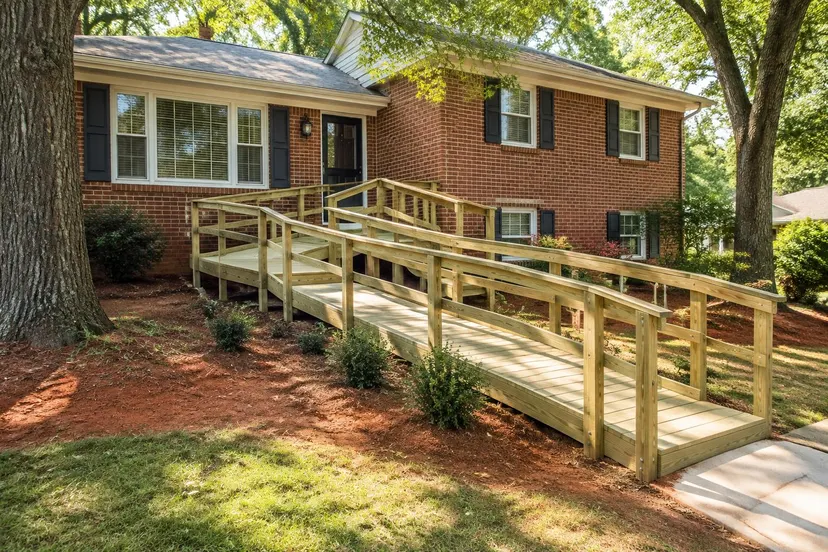
Wheelchair Ramp Installation in Charlotte, NC
Charlotte Home Accessibility connects Charlotte homeowners with independent local contractors for wheelchair ramp installation, from modular aluminum ramps to wood ramps built to match a porch, along with stair lifts and walk-in showers.
Plenty of Charlotte houses sit up off the ground. Split-level and raised-ranch homes, houses on a crawl space, and lots that slope up from the street often mean several steps before you reach the front door. When those steps get hard to manage with a wheelchair, walker or cane, a ramp is often the change that matters most.
What wheelchair ramp installation involves
A home ramp is a sloped walkway with level landings, handrails on both sides and edge protection so wheels can't slip off the side. The contractor measures the rise (the height from the ground to the door threshold), plans the route around the yard, and sets the ramp on footings or adjustable legs.
Modular aluminum ramps
Modular ramps are made of pre-built aluminum sections, landings and rails bolted together on site. They usually go in within a day, don't rot, and can be taken apart and moved or resold later. The surface is usually textured or grated for grip and lets rain drain through.
Wood ramps
A wood ramp is built from pressure-treated lumber, usually on posts set in the ground. It can be shaped to fit a porch or deck and stained to match the house. Wood needs sealing every few years in Charlotte's hot, humid summers, and a non-slip coating or tread strips help when it's wet.
The 1:12 slope and landings
ADA guidelines use a slope of 1:12, meaning 1 inch of rise for every 12 inches of length, and that's a common target for home ramps too. A long ramp needs a level resting landing at least every 30 feet of run, plus landings at the door and at any turn. For a high raised entry, that's why many ramps switch back along the front of the house.
Signs you may need a ramp
- Someone in the home now uses a wheelchair, power chair, scooter or walker.
- The entry steps feel risky, especially when wet or after dark.
- A hospital stay or surgery is coming and getting home will be hard.
- Visitors or caregivers struggle to help someone up the steps.
- A physical or occupational therapist has suggested a step-free entry.
Typical wheelchair ramp cost
Typical range, based on HomeGuide's published national cost guide: about $1,000–$6,000+ for a permanent ramp, about $350–$3,000 for a modular ramp and about $50–$600 for a portable ramp. Actual cost could be higher or lower depending on the property and scope. These are published national ranges, not quotes. Your actual price could be higher or lower. The independent local contractor who visits your home sets the final price. See all accessibility cost ranges and sources.
What affects the price
- Height of the entry: more rise means a longer ramp, more landings and more material.
- Material: modular aluminum, pressure-treated wood or a poured concrete ramp each price differently.
- Layout: switchbacks and turns need extra landings.
- The yard: slopes, roots from mature trees and Charlotte's red clay soil can make footings more work.
- Permits: a permanent ramp may need a permit and inspection.
- Buy or rent: some installers offer modular ramp rentals for short-term needs.
How the process works
- Call or send the form. Tell us about the entry, roughly how many steps there are and who will use the ramp.
- We pass your request to a local contractor. They contact you to set up a visit.
- Home visit and measurements. The contractor measures the rise and the yard, suggests a layout and material, and gives you a quote.
- Permits and installation. If you go ahead, the contractor handles any permit and schedules the build.
Questions about whether a permit is needed can go to Mecklenburg County Code Enforcement, which handles residential permits for Charlotte. If you live in an HOA, check its rules for exterior changes before work starts.
Related services
- Wheelchair ramps across the Charlotte area
- Wheelchair lifts and vertical platform lifts for entries too high for a ramp
- Doorway widening so a wheelchair fits through once you're inside
- Grab bar installation
- Accessibility cost ranges
Areas served
We take ramp requests from across Charlotte, from older neighborhoods near Uptown to the south side around Ballantyne, and from the surrounding towns in Mecklenburg, Union, Cabarrus, Gaston and York counties. See the full list on our areas we serve page.
Questions about wheelchair ramps in Charlotte
How much does wheelchair ramp installation cost in Charlotte, NC?
HomeGuide's published national ranges are about $1,000–$6,000+ for a permanent ramp and about $350–$3,000 for a modular ramp. Your price depends on how high the entry is, the material and the site, and the contractor who visits sets the final price.
How long does a wheelchair ramp need to be?
A common rule is 1 foot of ramp for every inch of rise, the 1:12 slope used in ADA guidelines. A door 24 inches above the ground needs about 24 feet of ramp, plus level landings at the top, bottom and any turns.
Is a wood or aluminum ramp better for my Charlotte home?
Neither is always better: modular aluminum goes in fast, needs little upkeep and can be removed or reused, while a wood ramp can be built to match a porch or deck. Wood needs periodic sealing in Charlotte's humid summers.
Do I need a permit for a wheelchair ramp in Charlotte?
A permanent ramp often needs a permit, so ask the contractor to confirm and pull it. In Charlotte, residential permits go through Mecklenburg County Code Enforcement, and if you're in an HOA, check its rules for exterior changes too.
Who installs the ramp and sets the price?
An independent local contractor does. Charlotte Home Accessibility is a referral website. We pass along your request, and the contractor visits, gives you a quote and schedules the work.